K. A. Prodoehl, L. G.
Campbell, A.G. Dexter
USDA/ARS Northern Crops Science Laboratory
North Dakota Agricultural Experiment Station
Fargo, North Dakota 58105-5677
The herbicide combination phenmedipham + desmedipham (Betamix) was the most commonly used postemergence chemical for broadleaf weed control in 1988 and 1989. According to the annual surveys, 75% of the growers had applied Betamix on their sugarbeet acreage. Sugarbeet injury has been reported with the use of Betamix and Betanex. In 1989, approximately 60% of the respondents reported slight to moderate crop injury with the use of Betamix or Betanex. Other research has reported that the most severe damage occurred when the plants were treated at the two-leaf stage.
The effect of crop injury in the early growth stages on different sugarbeet cultivars is unknown. This research project studied the effect of Betamix on the photosynthetic rate of several sugarbeet cultivars. Photosynthesis was measured using the Li-Cor 6000 photosynthesis system. Recovery of photosynthetic activity was calculated to determine if cultivars varied in photosynthesis, root yield, or sucrose concentration.
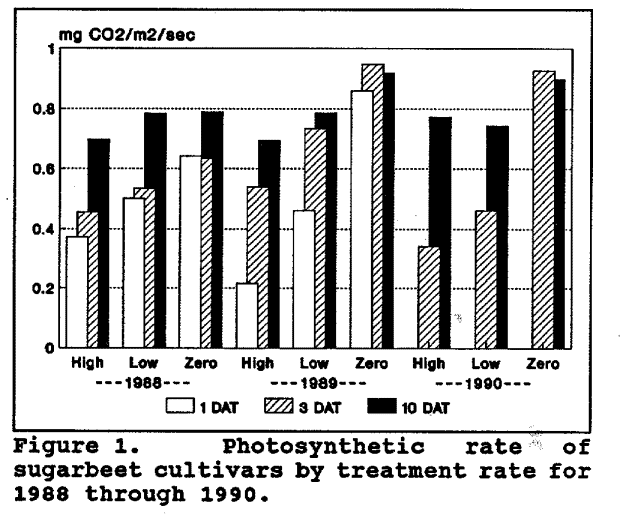
Measurement of the photosynthetic rate on sugarbeet tissue treated with Betamix demonstrated that photosynthesis was reduced substantially 1 and 3 days after treatment (DAT) with a high and low rate of Betamix (Figure 1). Betamix was applied at 3.0 lbs/a in 1988 for the high rate, and 1.5 lbs/a for the low rate. In 1989 and 1990, the rates applied were 1.5 and 0.75 lbs/a for the high and low rates, respectively. Herbicide rates were adjusted for growth stage of the sugarbeet cultivars by treatment rate for crop and moisture conditions at the time of application. Plants treated with the high rate of Betamix increased their photosynthetic rate approximately 75% from 1 DAT to 10 DAT (Figure 1). Older leaves of the sugarbeet plant are replaced by younger leaves as the primary suppliers of photosynthate. Since Betamix is not translocated throughout the sugarbeet plant, growth and total plant photosynthesis are slowed only temporarily after herbicide application.
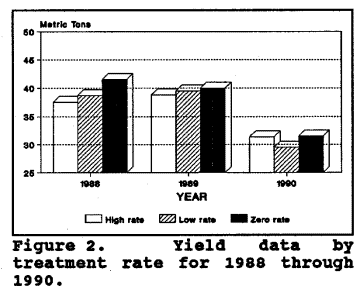
In 1988 and 1989, plots treated with the high rate of Betamix yielded less than untreated plots (Figure 2). Root yield was reduced in relation to the rate of herbicide applied although statistically was non-significant. Yields in 1990 were inconclusive due to poor stands. Further study is needed to determine the relationship between yield and treatment rates of Betamix. The low rate did not appear to reduce yields as consistently as the high rate. This may be a reflection of the differences in photosynthetic rate between the two herbicide rates applied.
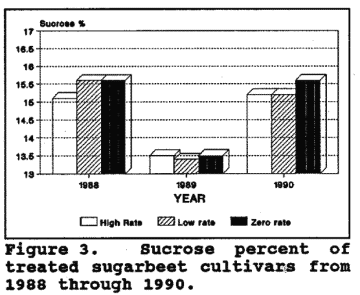
Sucrose and processing quality appeared to be affected more by environment and genetic factors than by reduced photosynthetic rates (Figure 3). The 1988 results suggested that sucrose levels may be slightly reduced by the high rate of Betamix, but the 1989 and 1990 data did not support that trend. The combination of drought stress plus the high rate of Betamix, may have reduced the sucrose concentrations.
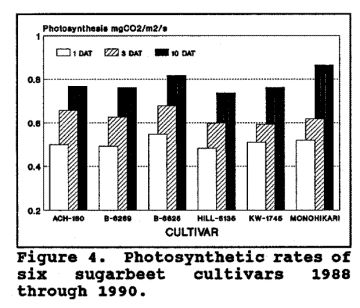
Cultivar response to treatments were nonsignificant. The cultivars varied in recovery of photosynthetic rate, but a consistent differential response to herbicide application was not detected. Cultivar response to Betamix application rates is shown in Figure 4. The performance of the cultivars indicated that differential tolerance to Betamix was minor among the cultivars examined in this study.
1990 Sugarbeet Research and Extension Reports. Volume 21, pages 85-86.