Dr. Darrell F. Cole
Research Plant Physiologist
U. S. Department of Agriculture
Agriculture Research Service
Fargo, North Dakota
Sugarbeet storage is one of the major problems confronting the sugarbeet industry in the Red River Valley area. With the increase in acreage (3 new Cooperatives) the number of beets in storage will increase dramatically next year. This increase along with the present production will probably cause an estimated loss of $30-35 million during the storage period in the Red River Valley. Several factors affect the loss of sugar during storage including temperature, humidity, variety, and microbial degradation. The temperature of the beets is probably the most important factor affecting the loss of sugar. As temperature is increased 10 F1 respiration rates are doubled, Higher temperatures also increase the losses due to microbial degradation, Temperature control of the stored beets appears to be an area where large scale tests need to be conducted. Unless temperatures are controlled other factors affecting storability of beets may be difficult to assess.
Presently we are investigating several factors which may affect storability of beets under controlled temperature conditions. These factors include genetic, cultural and other agronomic practices. Specifically we are looking at variety, fertility, herbicides, moisture, and mechanical damage effects on beets stored at 5 C.
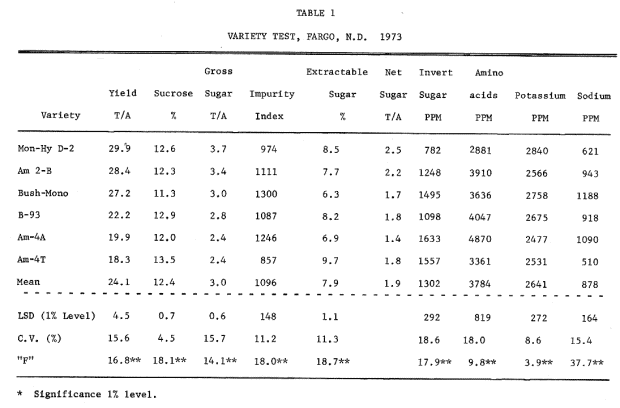
Data in Table 1 shows differences among six varieties in yield, sucrose and impurity levels at harvest. These varieties are being studied through a 150 day storage period by measuring respiration rates and other physiological changes.
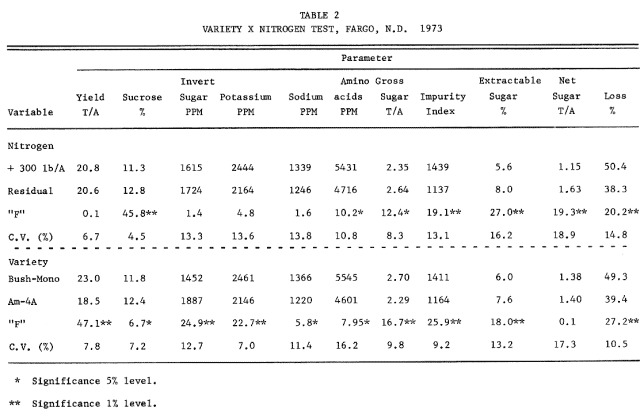
Fertility effects (high nitrogen) are shown on two varieties (Table 2). The residual nitrogen level (150 lb/A at planting) appeared to be adequate for maximum yields since no significant differences were detected at harvest. However, the high N level caused a significant reduction in the amount of extractable sugar due to high levels of impurities and lower sucrose levels.
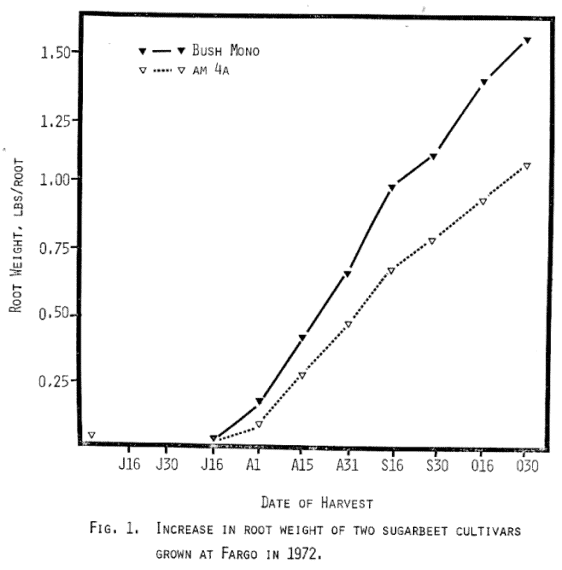
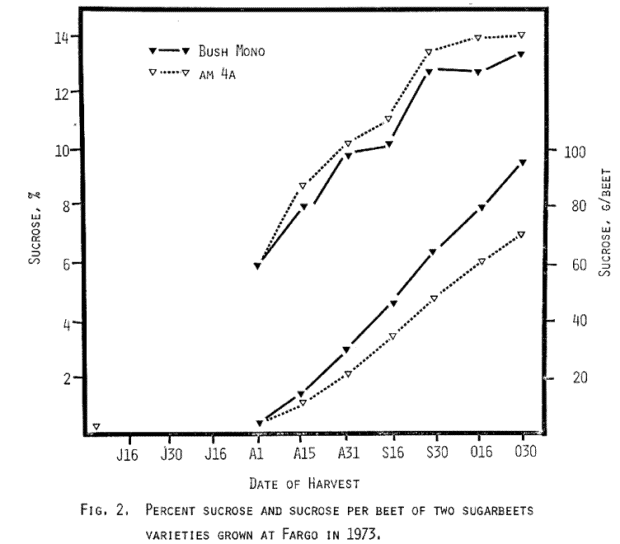
The growth rates of two cultivars were studied this past summer at Fargo (Fig. 1 and Fig. 2). Seed were planted on June 4 and harvests were made twice monthly beginning the middle of July. The data shows that Bush-Mono had a faster growth rate than Am-4A but a lower percentage of sucrose. However, total sucrose per beet was greater for Bush-Mono due to the larger root.
1973 Sugarbeet Research and Extension Reports. Volume 4, page 82 - 86.