NDSU Department of Soils
Armand Bauer,
Thomas Heimbuch,
Keith Cassel
and LeRoy Zimmerman
Water impounded by the Garrison Dam is scheduled to be delivered to the West Oakes Irrigation District of about 19,000 acres by 1976. The irrigation water will be applied by sprinkler systems.
The Department of Soils has been engaged in research at the Robert Titus site near Oakes (Sec. 17 T130N R57W) since 1970. Effort has been directed, but not limited, to evaluate the effect of variable nitrogen and water levels on crop performance, the effect of water level on nitrate-nitrogen movement in soil, irrigation scheduling, and evaluation of water use efficiency. While several crops have been included in these studies, this report will be limited to data from trials conducted with sugarbeets under varying levels of water and nitrogen.
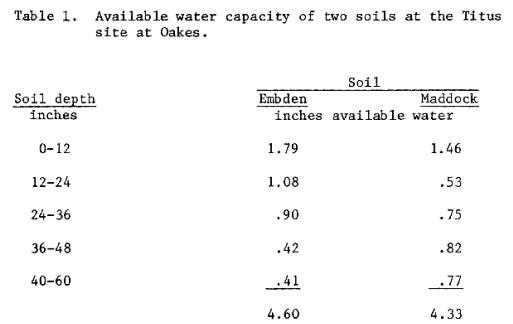
The soils at the Titus site developed in sandy materials of Glacial Lake Dakota. They are predominantly moderately-coarse textured and have available water holding capacities of 4 to 5 inches in the upper 4 feet of the profile, the major portion in the upper 1 1/2 feet (Table 1). These soils offer the advantage of warming up rapidly in the spring (if moderately well to well drained) and can be worked within a day after a rain under normal temperature conditions, as well as being easily tilled. Less desirable features of these kinds of soils as compared to medium textured and finer soils is the already mentioned lower available water capacity which in turn then requires more frequent irrigations to supply the same quantity of water within the rooting zone, and which intensifies the problem of leaching of mobile nutrients -- hence a greater problem of managing nitrogen fertilizer.
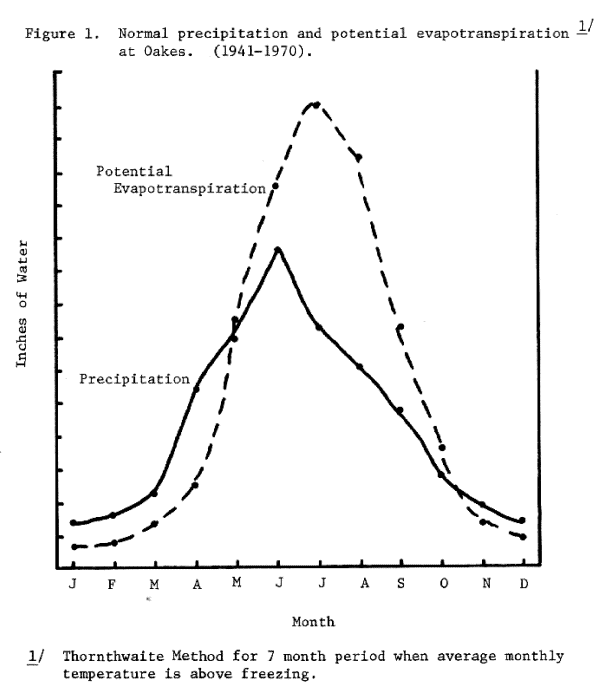
The climate at Oakes is sub-humid. Data in Figure 1 shows the normal monthly precipitation and the potential evaporation as estimated from the Thornthwaite method (7 months) and from estimates of the vapor pressure of ice. These data show that in a normal year water shortages are not likely to develop until about July, (water shortages can be expected to develop when potential evapotranspiration exceeds precipitation) but then continue through September.
Plots were six rows wide and 38 feet long. The main blocks, three water levels, were replicated four times in 1971, but in 1972 and 1973 the main blocks of four water levels were replicated three times. Irrigation water was applied with small plot irrigators
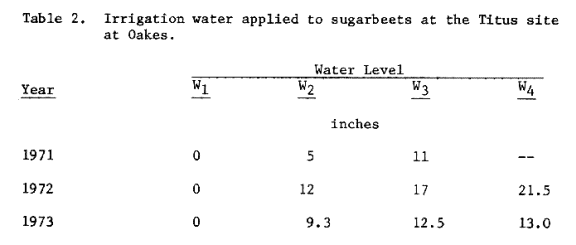
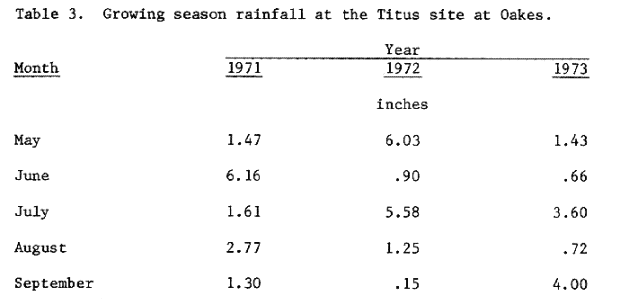
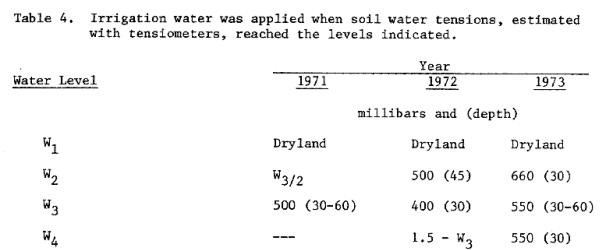
The amount of irrigation water applied varied with years (Table 2) and depended upon the amount of growing season rainfall (Table 3). Irrigations were scheduled by estimating the soil water status with tensiometers (Table 4).
Root and top yields were estimated from 8 to 10 consecutive beets taken from the border rows, periodically throughout the growing season. Final root harvests were taken from two rows each 30 feet long on October 8, 1971, October 17, 1972 and Sept. 26, 1973. In 1971 the beets were topped by hand, and mechanically the other two years.
Sugar analysis were done by the American Crystal Sugar Laboratory at Rocky Ford, Colorado.
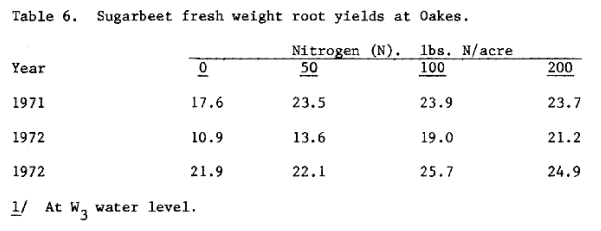
The effect of fertilizer nitrogen (N) on fresh root yields are shown in data presented in Table 6. These data indicate that nitrogen (N) in the range of 50 to 100 pounds was needed for maximum yield.
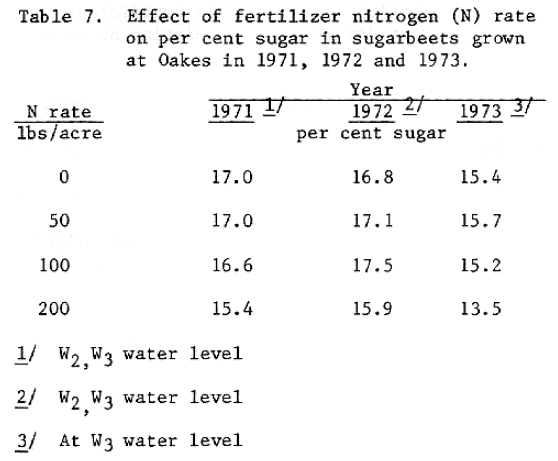
Data of the per cent sugar, as influenced by fertilizer nitrogen rate at the water level producing a significant root yield increase, are shown in Table 7. Sugar percent was decreased more than one percentage unit when more nitrogen was applied than was needed for maximum yield increase.
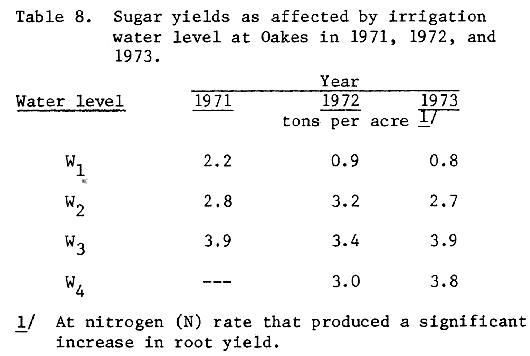
Data of the sugar yield, as influenced by water level at the nitrogen (N) rate that produced a significant root yield increase, are shown in Table 8. The best combination of nitrogen and water produced sugar yields approaching 4 tons per acre.
The root dry matter yields that were evaluated from harvesting 8 to 10 consecutive beets in a row several times during the season, were subjected to correlation and regression analyses with growing degree units (GDU). A growing degree unit, as used in this study, was calculated as follows:
GDU = Maximum daily temperature + Minimum daily temperature -40°F
2
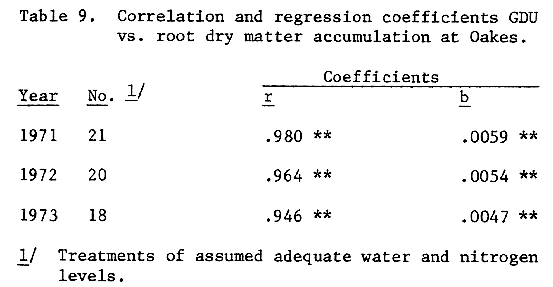
Correlation and regression coefficients were highly significant for each of the three years, when considering the yields from the nitrogen and water treatments that were assumed as not limiting root yields. (Table 9).
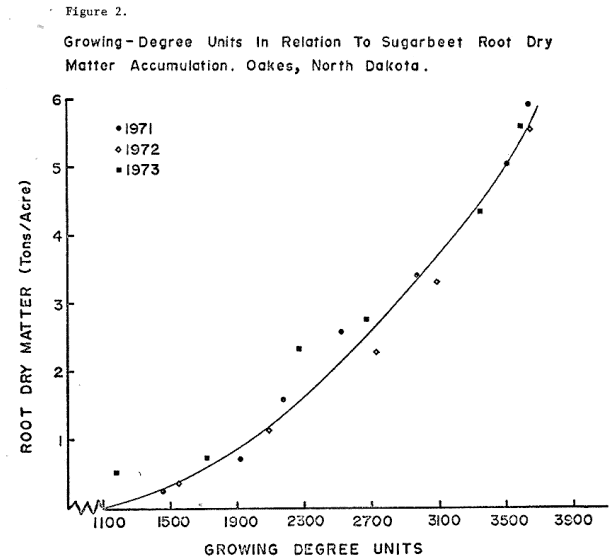
The data from the three-year period were combined for regression analysis (Figure 2). There data suggest that it requires about 1100 GDU's to produce about 0.2 tons root dry matter per acre at 27,000 plants per acre and that rate of accumulation is more rapid after 2400 GDU's have accumulated.
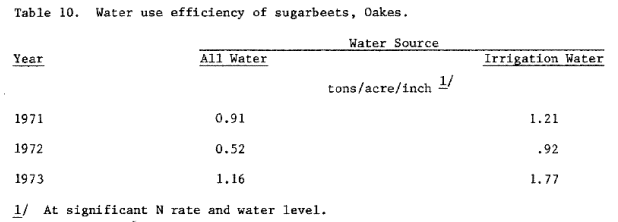
Data of water use efficiency, tons per inch water, are presented in Table10 for all sources of water (rainfall, irrigation, and water removed from the soil to a given depth between planting and harvest) and for irrigation water only. These data show that water use efficiency varies from year to year with as much as a 2--fold difference. This outcome is expected since tile rate at which water is evaporated from plants and soils depends upon climatic conditions of temperature, wind and humidity. Since these elements of climate differ, the evaporation rate will differ also.
Sugarbeet production under irrigation is likely to provide stability to the sugar processor in that extreme yield fluctuations are not as likely to occur as under dryland. An advantage of sugarbeet production on soils of moderately coarse texture, as occur in the West Oakes Irrigation District, is that harvesting operations can proceed much sooner after the soil has been wetted by rainfall than on Finer textured soils. This, at times, may mean the difference between a complete harvest and a partial harvest.
1973 Sugarbeet Research and Extension Reports. Volume 4, page 49 - 58.