In order to determine the effect of cultivation on evapo-transpiration and use of available soil moisture on sugarbeet production, a research trial was initiated in the spring of 1973 at the Northwest Experiment Station. Replicated plots were laid out on Fargo silty clay loam soil and planted to beets on May 1. Plots were six rows wide and 30 feet long. Randomized treatments were 0, 1, 2, 3, 4, and 5 cultivations during the season and were applied with a standard six-row sugarbeet cultivator.
The first treatment was applied on May 31 when all plots except "0 cultivation" were cultivated. The second cultivation to specified plots was performed on June 12, the third cultivation on June 22, the fourth cultivation on June 25, and the fifth cultivation on July 5. Weeds were controlled on plots designated "0 cultivation" by hand-hoeing. All other plots were hand weeded and thinned.
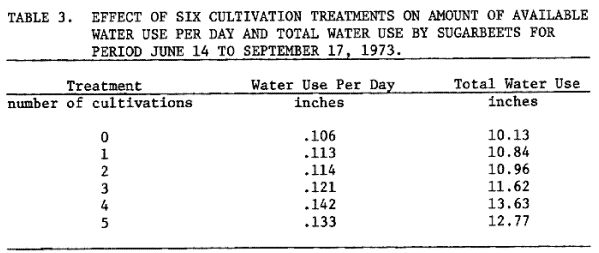
Soil samples from 0-60 inches were taken on the first of the month and available soil moisture determinations were made by standard methods. Another set of soil samples from 0-36 inches was taken mid-month for available soil moisture determinations. Calculations were made from these data of the total water used and water use per day for the six treatments in the study for the sampling period of June 14, 1973, to September 17, 1973. Table 3 is based on the 0-36 inch soil moisture sample.
Evapo-transpiration is the soil water lost by surface evaporation and transpiration by plants. Together they account for the consumptive use of water in producing crops. Surface evaporation is greatest in the early part of the growing season before plant foliage covers the soil surface. Excessive cultivation also increases soil moisture loss. The daily water use increased as indicated in table 3 as the number of cultivations increased. The total water use for the period of this trial was greatest on the plots which received four cultivations compared to the plots with "0" cultivations. This figure was 3.50 inches and indicates that excessive cultivation results in a soil moisture loss.
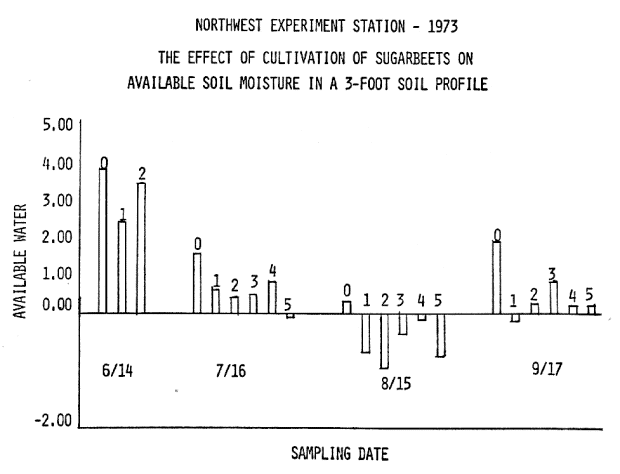
This data is given in graph form for the 0-36 inch depth. Sampling dates are given on the horizontal line and the inches of available water are given on the vertical line. The numbers on the bars refer to the umber of cultivations per treatment.
Yield data will be available in the near future.
Effect of Cultivation of Sugarbeets on Available Soil Moisture in 3-foot Soil Profile
These beets were very high in moisture as indicated by the yield on the dry basis. Although Blanca yielded 15 tons less than Polyfourra the weight on the dry was the same. Percent sugar was rather low. The stand was excellent.
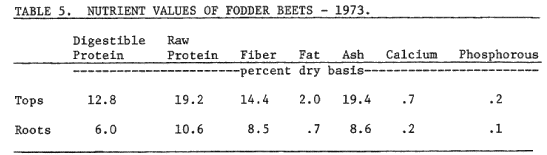
The feeding value which is a composite of the two varieties is given in Table 5.
1973 Sugarbeet Research and Extension Reports. Volume 4, page 46 - 48.