Olaf C. Soine, Soil Scientist
Russell Severson, Asst. Scientist
Northwest Experiment Station
The four-year average figures were higher for black and alfalfa fallow as compared to 1973. The amounts of nitrate-nitrogen in the soil on the three non-fallow rotations were very similar.
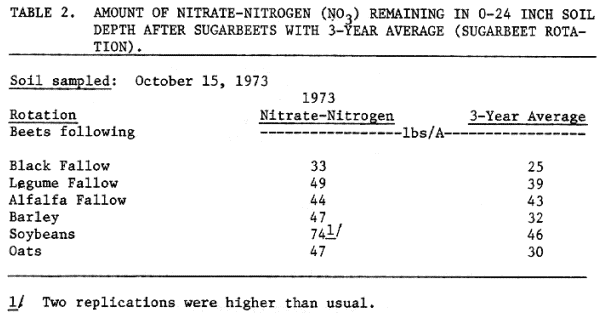
The amount of nitrate-nitrogen remaining in the soil after the removal of the beet crop from the six rotations are given in table 2.
The amount of nitrate-nitrogen remaining in the soil were very similar for all six rotations. Two replications of the soybean plots were higher than usual in 1973 but the three-year averages were similar to the other rotations.
The main top roots will go down five feet or more under favorable conditions. Any constriction such as a hard pan, plow sole, or large amount of strawy, organic matter will cause sprangling of roots.
A simple trial was started in the spring of 1973 to study root development. Four methods of constricting the subsoil were used:
The furrow was covered again and beets were planted. Soil sections were lifted and root development was studied.
Compacting the furrow bottom caused severe sprangling of roots. The plastic served as a barrier and resulted in sprangling. Barnyard manure affected the shape and caused sprangling. The last treatment had no effect on root development.
Excessive tillage of fine texture soils causes sprangling and plowing at the same depth year after year tends to produce a "plow sole" which restricts root development. "Doubles"--two beets growing together--will also cause sprangling.
1 Nelson, Wallace. 1969. Root Proliferation Studies. Agro. Jour., Vol. 61, Sept.-Oct. 1969.
1973 Sugarbeet Research and Extension Reports. Volume 4, page 44 - 45.